

Bringing Scything Back to North East Scotland
As the 2026 Wildflower and Scything Workshop season comes to an end. We reflect on how scything in North East Scotland is helping restore biodiverse and reconnect people with traditional land management skills.
NESBiP are bringing back the old tradition of scything to North East Scotland, and here’s why.
As the 2026 Wildflower and Scything Workshop season comes to an end, we’re looking back at why an age-old practice is making a comeback. Traditional meadow mowing with a scythe offers a simple, sustainable way to support biodiversity. It also brings people together to care for nature in North East Scotland.
For centuries, scythes were a familiar feature of the Scottish landscape. Before machinery became widespread, they were the primary tool for cutting hay meadows and managing grasslands. Traditional meadow management created species-rich habitats full of wildflowers, pollinators, and other wildlife. Today, as communities look for sustainable ways to enhance biodiversity and care for local greenspaces, interest in scything is growing once again.
Why Scything Is Good for Biodiversity.
Unlike powered mowers, scythes allow grasslands to be managed carefully and selectively. Areas can be cut gradually rather than all at once, creating a mosaic of habitats that benefits insects, birds and other wildlife. Scything also causes less disturbance, giving wildlife more opportunity to move away from the area being managed.
Scything supports the important practice of “cut and lift” meadow management. By removing cut vegetation after mowing, nutrients are gradually reduced in the soil, helping to create the conditions that wildflowers need to flourish. Over time, this can increase the diversity of plants and create more resilient habitats.
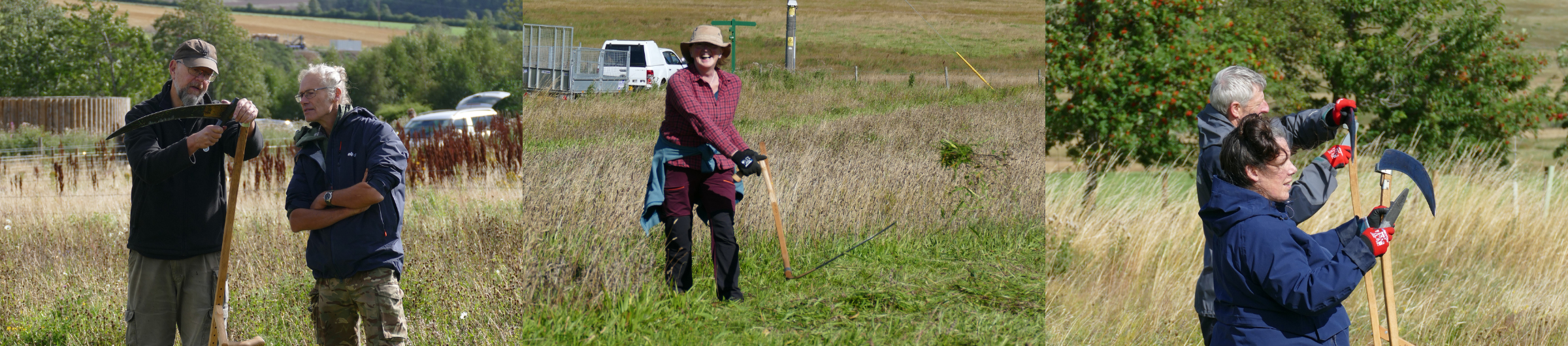
Over the last 2 years we have trained over 100 people to scythe
A Sustainable Alternative.
In addition to its biodiversity benefits, scything is a low-carbon and cost-effective management tool. It produces no direct emissions during use, is quiet, and requires no fuel or electricity. A well-maintained scythe can last for decades, making it a practical long-term investment for communities and organisations managing greenspaces.
More Than a Conservation Tool.
One of the greatest strengths of scything is its ability to bring people together. Throughout the 2026 workshop season, participants have learned new skills, connected with nature and contributed directly to the management of valuable habitats. Community scything events demonstrate that conservation can be hands-on, enjoyable and accessible to people of all ages and backgrounds. Like our annual mowing day at Tomintoul Wildflower Meadow, which brings rangers from the Glenlivet Estate and Cairngorms National Park together with the local community.
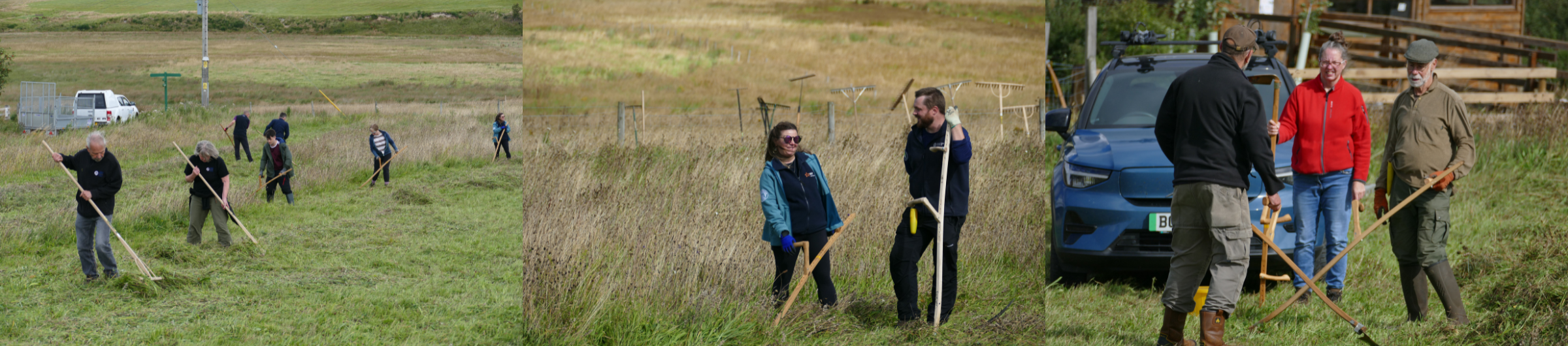
Catching up with friends, family or colleagues is equally as important as the scything itself!
As more people discover the benefits of scything, there is an exciting opportunity to build a stronger network of volunteers across North East Scotland. A local scything group could help share skills and equipment and support meadow restoration projects. Whilst providing opportunities for people to learn traditional land management techniques while contributing to biodiversity recovery.
Join the North East Scotland Scything Group.
NESBiP would love to hear from anyone interested in becoming part of a North East Scotland Scything Group. Whether you’re an experienced scyther, have attended one of our workshops, own a scythe, or simply want to learn more. We’d be delighted to welcome you!
Together, we can help restore traditional meadow management. Create richer habitats for wildlife. Build a community of people passionate about nature and conservation.
If you would like to join the North East Scotland Scything Group or find out more, please contact NESBiP at nesbip@hutton.ac.uk. We look forward to hearing from you.
You can read our reflection blog from he 2025 wildflower and scything workshops here: 10 Things We Learnt From Our Wildflower & Scything Workshops.
A special thanks goes to…
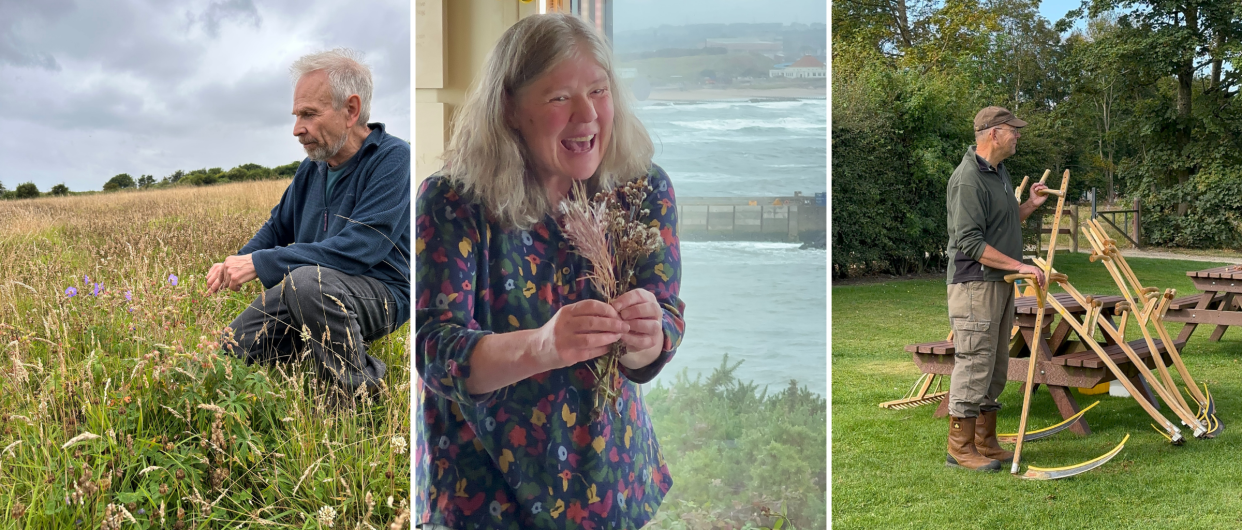
… Doug, John and Kate for delivering the wildflower and scything workshops for NESBiP. Their enthusiasm and passion for protecting biodiversity are contagious. I hope the attendees felt this too! We hope you have a well-deserved break.
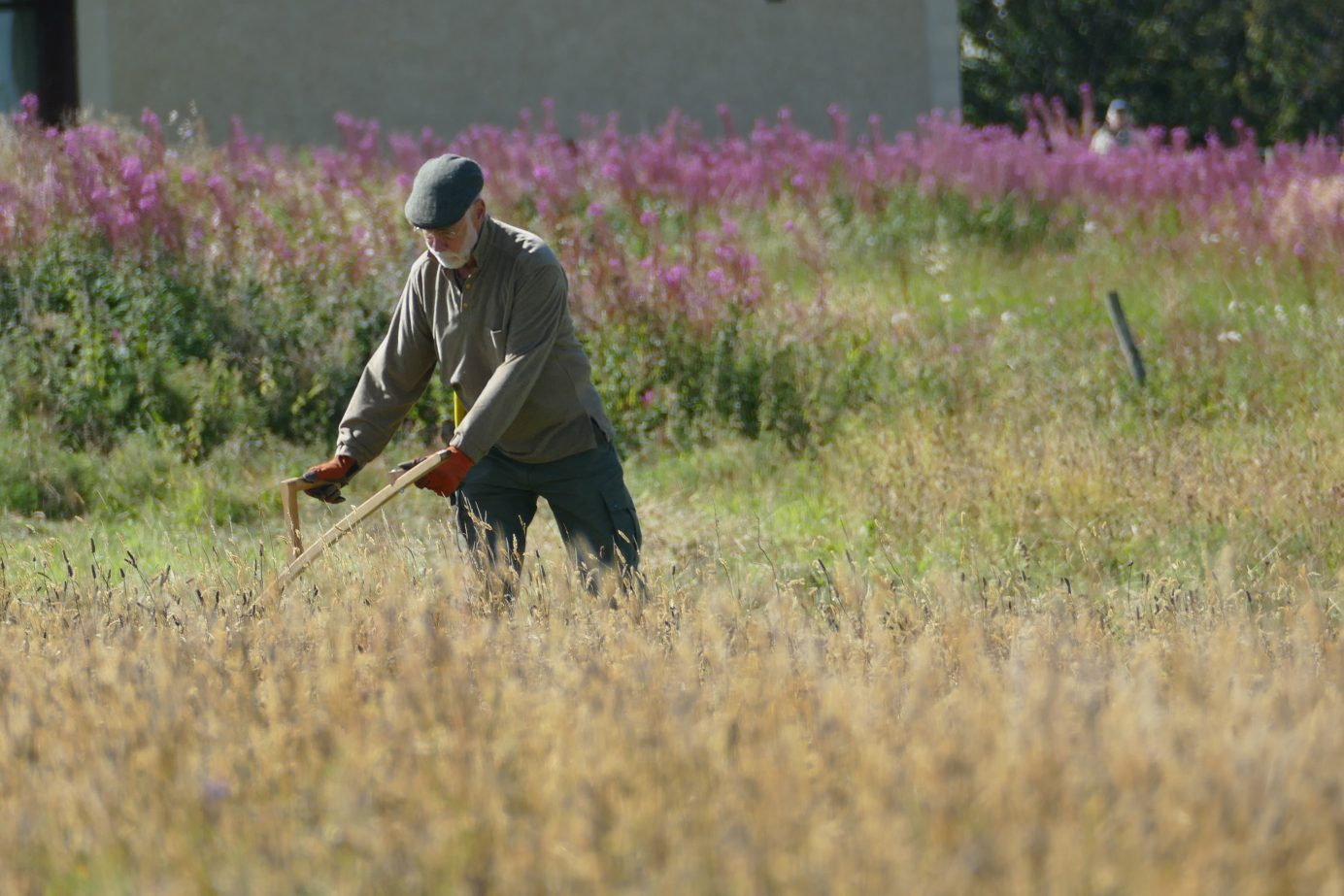
© Abbie Ferrar